
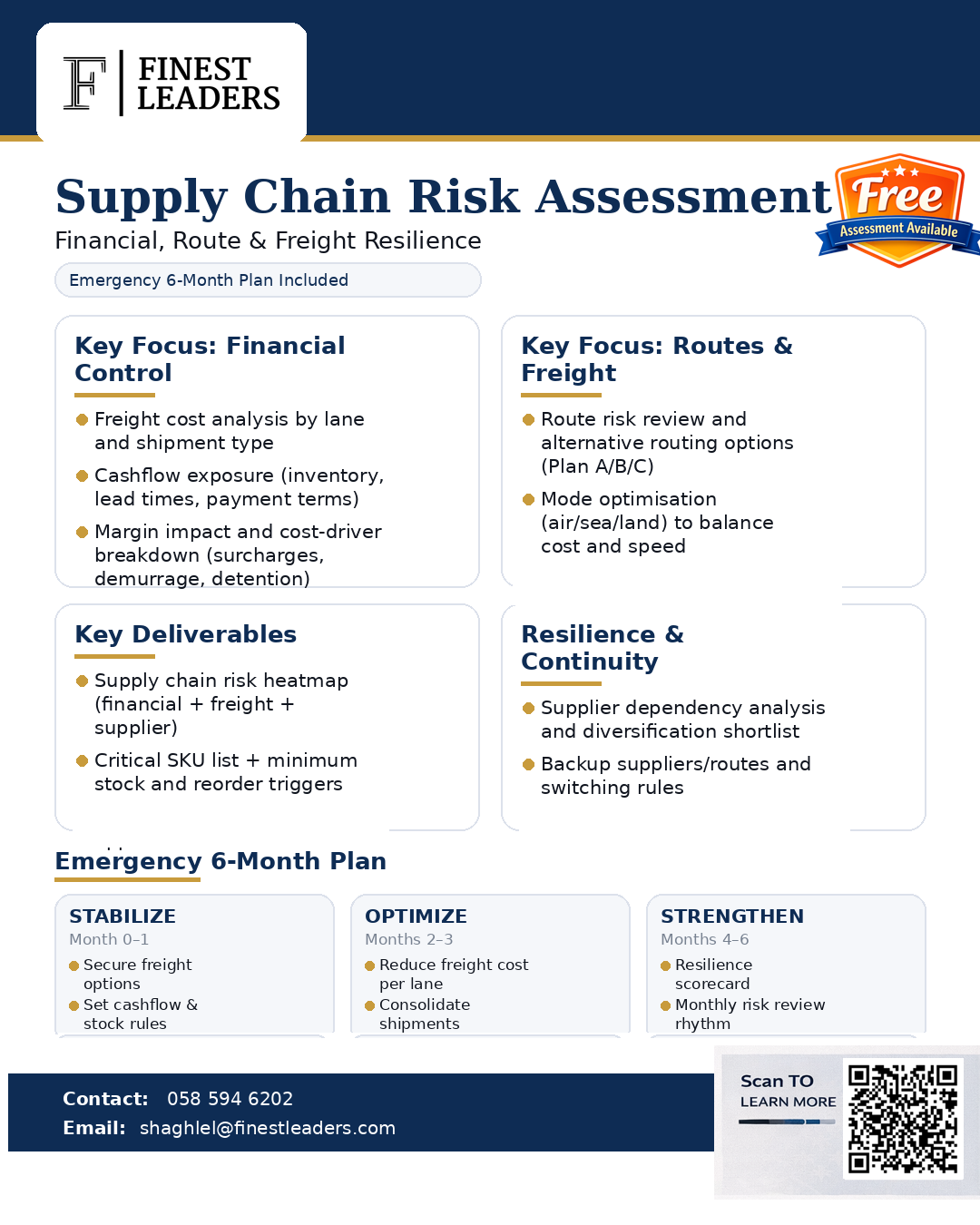
Supply Chain Risk Assessment
AED 49999.00
Financial, Route & Freight Resilience (Emergency 6-Month Plan Included)
Service Objective
To identify and reduce supply chain risk exposure by focusing on what hits the business fastest during disruption: cost, cashflow, freight reliability, and delivery performance. This project builds a practical resilience plan that protects inventory flow while improving freight efficiency and spend control.
Core Focus Areas
1) Financial Risk & Cost Control (Primary Focus)
Freight spend analysis (cost per shipment / lane / kg / container)
Cost drivers (fuel, surcharges, demurrage, detention, storage)
Margin impact (what cost increases do to pricing and profitability)
Cashflow exposure (cash tied in inventory, longer lead times)
Vendor payment terms and risk (prepayment, currency exposure)
2) Routes & Freight Optimization
Route risk assessment (high-risk lanes, congestion, border delays)
Mode optimization (air/sea/land trade-offs under disruption)
Carrier reliability review and diversification
Consolidation opportunities (reduce shipments, improve load factor)
Incoterms / responsibility clarity (who pays what, where risk sits)
3) Resilience & Continuity
Supplier dependency risk (single-source exposure)
Alternative supplier and routing options (Plan A/B/C)
Critical SKU prioritization (“must never run out” list)
Minimum stock and reorder triggers adjusted for disrupted lead times
Emergency procurement and approvals (fast decision governance)
Key Deliverables
Supply Chain Risk Heatmap (Financial + Freight + Route + Supplier)
Freight Spend & Lane Optimization Summary
Route & Carrier Resilience Plan (Plan A/B/C)
Critical SKU List + Min Stock / Reorder Triggers
Emergency Procurement & Approval Matrix
Emergency 6-Month Plan (detailed below)
Emergency 6-Month Plan (What Client Gets)
A clear, practical 6-month roadmap that includes:
Month 0–1: Stabilize
Freeze critical SKU policy + min stock rules
Implement emergency approvals and procurement shortcuts
Immediate route/carrier backup activation rules
Month 2–3: Optimize
Reduce freight spend through consolidation and lane redesign
Supplier diversification shortlist + onboarding steps
Renegotiate key freight terms (surcharges, demurrage, SLAs)
Month 4–6: Strengthen
Resilience scorecard & monthly review rhythm
Implement continuous tracking for lead times, service levels, and freight cost
Finalize long-term contracts and risk controls